Choose language

Forgot your password?

Need a Spoofbox account? Create one for FREE!

No subscription or hidden extras

Login


From p. 40 of Signet Edition of Thomas Wolfe's _You Can't Go Home Again_ (1940): Some things will never change. Some things will always be the same. Lean down your ear upon the earth and listen. The voice of forest water in the night, a woman's laughter in the dark, the clean, hard rattle of raked gravel, the cricketing stitch of midday in hot meadows, the delicate web of children's voices in bright air--these things will never change. The glitter of sunlight on roughened water, the glory of the stars, the innocence of morning, the smell of the sea in harbors, the feathery blur and smoky buddings of young boughs, and something there that comes and goes and never can be captured, the thorn of spring, the sharp and tongueless cry--these things will always be the same. All things belonging to the earth will never change--the leaf, the blade, the flower, the wind that cries and sleeps and wakes again, the trees whose stiff arms clash and tremble in the dark, and the dust of lovers long since buried in the earth--all things proceeding from the earth to seasons, all things that lapse and change and come again upon the earth--these things will always be the same, for they come up from the earth that never changes, they go back into the earth that lasts forever. Only the earth endures, but it endures forever. The tarantula, the adder, and the asp will also never change. Pain and death will always be the same. But under the pavements trembling like a pulse, under the buildings trembling like a cry, under the waste of time, under the hoof of the beast above the broken bones of cities, there will be something growing like a flower, something bursting from the earth again, forever deathless, faithful, coming into life again like April.


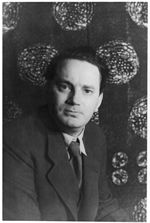
Thomas Wolfe


#change


Quote by Thomas Wolfe

Read through all quotes from Thomas Wolfe


About Thomas Wolfe

Thomas Wolfe Quotes


Did you know about Thomas Wolfe?

" Both in his 1930 Nobel Prize for Literature acceptance speech and original press conference announcement Sinclair Lewis the first American to win the Nobel Prize for literature said of Wolfe "He may have a chance to be the greatest American writer. Afterward
Wolfe saw less than half of his work publiThomas Wolfed in his lifetime due to the amount of the material he left at his death. On the way he stopped at Purdue University and gave a lecture Writing and Living then spent two weeks traveling through 11 national parks in the West the only part of the country he had never visited before.

He is known for mixing highly original poetic rhapsodic and impressionistic prose with autobiographical writing. He remains one of the most important writers in modern American literature as he was one of the first masters of autobiographical fiction. He became very famous during his own lifetime.

back to top