Choose language

Forgot your password?

Need a Spoofbox account? Create one for FREE!

No subscription or hidden extras

Login


As the dawn loves the sunlight that must cease Ere dawn again may rise and pass in peace; Must die that she being dead may live again, To be by his new rising nearly slain. So rolls the great wheel of the great world round, And no change in it and no fault is found, And no true life of perdurable breath, And surely no irrevocable death. Day after day night comes that day may break, And day comes back for night’s reiterate sake. Each into each dies, each of each is born: Day past is night, shall night past not be morn? Out of this moonless and faint-hearted night That love yet lives in, shall there not be light? Light strong as love, that love may live in yet? Alas, but how shall foolish hope forget How all these loving things that kill and die Meet not but for a breath’s space and pass by? Night is kissed once of dawn and dies, and day But touches twilight and is rapt away. So may my love and her love meet once more, And meeting be divided as of yore. Yea, surely as the day-star loves the sun And when he hath risen is utterly undone, So is my love of her and hers of me— And its most sweetness bitter as the sea.


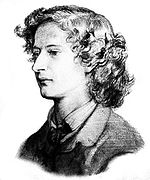
Algernon Charles Swinburne


#change


Quote by Algernon Charles Swinburne

Read through all quotes from Algernon Charles Swinburne


About Algernon Charles Swinburne

Algernon Charles Swinburne Quotes


Did you know about Algernon Charles Swinburne?

The Tragedies of Algernon Charles Swinburne 5 vols. Poems and Ballads caused a sensation when it was first publiAlgernon Charles Swinburned especially the poems written in homage of Sappho of Lesbos such as "Anactoria" and "Sapphics": Moxon and Co. One of them A Baby's Death was set to music by the English composer Sir Edward Elgar as the song Roundel: The little eyes that never knew Light.

Algernon Charles Swinburne (London 5 April 1837 – London 10 April 1909) was an English poet playwright novelist and critic. He invented the roundel form wrote several novels and contributed to the famous Eleventh Edition of the Encyclopædia Britannica. He was nominated for the Nobel Prize in Literature in every year from 1903 to 1907 and again in 1909.

back to top