Choose language

Forgot your password?

Need a Spoofbox account? Create one for FREE!

No subscription or hidden extras

Login


And with light lips yet full of their swift smile, And hands that wist not though they dug a grave, Undid the hasps of gold, and drank, and gave, And he drank after, a deep glad kingly draught: And all their life changed in them, for they quaffed Death; if it be death so to drink, and fare As men who change and are what these twain were. And shuddering with eyes full of fear and fire And heart-stung with a serpentine desire He turned and saw the terror in her eyes That yearned upon him shining in such wise As a star midway in the midnight fixed. Their Galahault was the cup, and she that mixed; Nor other hand there needed, nor sweet speech To lure their lips together; each on each Hung with strange eyes and hovered as a bird Wounded, and each mouth trembled for a world; Their heads neared, and their hands were drawn in one, And they saw dark, though still the unsunken sun Far through fine rain shot fire into the south; And their four lips became one burning mouth.


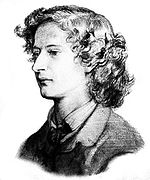
Algernon Charles Swinburne


#change


Quote by Algernon Charles Swinburne

Read through all quotes from Algernon Charles Swinburne


About Algernon Charles Swinburne

Algernon Charles Swinburne Quotes


Did you know about Algernon Charles Swinburne?

The Tragedies of Algernon Charles Swinburne 5 vols. Poems and Ballads caused a sensation when it was first publiAlgernon Charles Swinburned especially the poems written in homage of Sappho of Lesbos such as "Anactoria" and "Sapphics": Moxon and Co. One of them A Baby's Death was set to music by the English composer Sir Edward Elgar as the song Roundel: The little eyes that never knew Light.

Algernon Charles Swinburne (London 5 April 1837 – London 10 April 1909) was an English poet playwright novelist and critic. He invented the roundel form wrote several novels and contributed to the famous Eleventh Edition of the Encyclopædia Britannica. He was nominated for the Nobel Prize in Literature in every year from 1903 to 1907 and again in 1909.

back to top