Choose language

Forgot your password?

Need a Spoofbox account? Create one for FREE!

No subscription or hidden extras

Login


Busie olde foole, unruly Sunne; Why dost thou thus, Through windowes, and through curtaines call on us? Must to they motions lovers seasons run? Sawcy pedantique wretch, goe chide Late schoole boyes, and sowre prentices, Goe tell Court-huntsmen, that the King will ride, Call countrey ands to harvest offices; Love, all alike, no season knows, nor clyme, Nor houres, dayes, months, which are the rags of time. Thy beames, so reverend, and strong Why shouldst thou thinke? I could eclipse and cloud them with a winke, But that I would not lose her sight so long: If her eyes have not blinded thine Looke, and tomorrow late, tell mee, Whether both the India's of spice and Myne Be where thou leftst them, or lie here with mee. Aske for those Kings whom thou saw'st yesterday, And thou shalt heare, All here in one bed lay. She'is all States, and all Princes, I, Nothing else is; Princes doe but play us; compar'd to this, All honor's mimique; All wealth alchimie, Thou sunne art halfe as happy'as wee, In that the world's contracted thus; Thine ages askes ease, and since thy duties bee To warme the world, that's done in warming us. Shine here to us, and thou art every where; This bed thy center is, these walls, thy spheare.


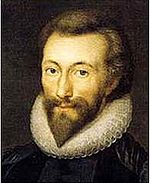
John Donne


#age


Quote by John Donne

Read through all quotes from John Donne


About John Donne

John Donne Quotes


Did you know about John Donne?

During this time Donne wrote but did not publish Biathanatos his defence of suicide. During his convalescence he wrote a series of meditations and prayers on health pain and sickness that were publiJohn Donned as a book in 1624 under the title of Devotions upon Emergent Occasions. Legacy
Donne is commemorated as a priest in the calendar of the Church of England and in the Calendar of Saints of the Evangelical Lutheran Church in America on 31 March.

In 1615 he became an Anglican priest although he did not want to take Anglican orders. He is particularly famous for his mastery of metaphysical conceits. He also served as a member of parliament in 1601 and in 1614.

back to top