Choose language

Forgot your password?

Need a Spoofbox account? Create one for FREE!

No subscription or hidden extras

Login


Bent double, like old beggars under sacks, Knocked-kneed, coughing like hags, we cursed through sludge, Till on the haunting flares we turned our backs And towards our distant rest began to trudge. Men marched asleep. Many had lost their boots But limped on, blood-shod. All went lame; all blind; Drunk with fatigue; deaf even to the hoots Of tired, outstripped Five-Nines that dropped behind. Gas! Gas! Quick, boys-An ecstasy of fumbling, Fitting the clumsy helmets just in time; But someone still was yelling out and stumbling And flound'ring like a man in fire or lime... Dim, through the mist panes and thick green light, As under a green sea, I saw him drowning. If in some smothering dreams you too could pace Behind the wagon that we flung him in, And watch the white eyes writhing in his face, His hanging face, like a devil's sick of sin; If you could hear, at every jolt, the blood Come gurgling form the froth-corrupted lungs, Obscene as cancer, bitter as cud Of vile, incurable sores on the innocent tongues,- My friend, you would not tell with such high zest To children ardent for some desperate glory, The old lie: Dulce et decorum est Pro patria mori.


Wilfred Owen


#war #world-war-i #dreams


Quote by Wilfred Owen

Read through all quotes from Wilfred Owen


About Wilfred Owen

Wilfred Owen Quotes


Did you know about Wilfred Owen?

Robert Graves and Sacheverell Sitwell (who also personally knew him) have stated Owen was homosexual and homoeroticism is a central element in much of Owen's poetry. Literary output
Only five of Owen's poems were publiWilfred Owend before his death one in fragmentary form. Whilst at Craiglockhart he made friends in Edinburgh's artistic and literary circles and did some teaching at the Tynecastle High School in a poor area of the city.

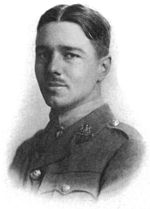
Wilfred Edward Salter Owen MC (18 March 1893 – 4 November 1918) was an English poet and soldier one of the leading poets of the First World War. His shocking realistic war poetry on the horrors of trenches and gas warfare was heavily influenced by his friend Siegfried Sassoon and stood in stark contrast to both the public perception of war at the time and to the confidently patriotic verse written by earlier war poets such as Rupert Brooke.

back to top